Pinyin for Kids: Pinyin Chart with Audio and Learning Games
Pinyin spells the sounds of Mandarin Chinese with Latin letters, and it is how children in mainland China learn to sound out new characters. Tap any sound below to hear it said aloud in Mandarin, then play a round of the memory game together.
Find the pairs
Turn two cards at a time and listen. Match all 3 pairs.
The 23 initials
An initial is the sound at the start of a syllable. Chinese teachers say each one with a vowel so it can be heard: b as bo, d as de, j as ji. The order is the one on Chinese classroom charts: b p m f, d t n l, g k h, j q x, zh ch sh r, z c s, y w.
The 24 finals
A final is the rest of the syllable: b + a is ba. The first six, a o e i u ü, are the simple finals; the rest are built from them, ending in n or ng at the end of the chart.
The four tones
The same syllable means different things in different tones: mā 妈 (mom), má 麻 (hemp), mǎ 马 (horse), mà 骂 (scold). The marks show the tune: ā stays high and level, á rises, ǎ dips and rises, à falls. A syllable with no mark is said light and short, like the ma in 妈妈 (māma).
16 syllables read as a whole
These are read in one go rather than sounded out letter by letter. In zhi, chi, shi, ri, zi, ci and si the i is not an ee sound: it just carries the buzz of the initial.
How to teach pinyin at home
Start with a o e, then b p m f
The pinyin lessons in Chinese first-grade textbooks begin with the simple finals a o e i u ü, then the initials b p m f. With a and b, p, m, f your child can already say ba, pa, ma, fa. Add the four tones on a early, as a game of high, rising, dipping and falling voices.
Ten minutes, most days
Short and often works better than long and rare. One round of the memory game, or a few sounds before bed, is plenty for a young child. Stop while it is still fun.
Three activities
- Memory match: lay out a few pairs face down and say each sound out loud as it turns over.
- Tone hands: draw each tone in the air while saying it, flat for ā, up for á, down and up for ǎ, down for à.
- Spell a name: put together the pinyin of family words, like bàba (dad) and māma (mom), from an initial and a final.
Letters that sound different from English
Pinyin uses English letters, but some say something else. q sounds close to the ch in cheese, x close to the sh in sheep, c like the ts in cats, z like the ds in reads, and zh, ch, sh are said with the tongue curled back. The e in pinyin isn't the English e either. Tap these sounds often and copy the voice rather than reading them as English.
The dots on ü, and where tone marks go
After j, q, x and y, ü is written without its dots: ju, qu, xu, yu still have the ü sound. Tone marks sit on a if there is one, else on o or e; in iu and ui the mark goes on the second letter, as in liù (six) and guì (expensive).
If you don't speak Mandarin yourself
You don't need to. Tap the sound, listen, and repeat it together, and trust the voice over the English look of the letters. Learning alongside your child is fine, and children often enjoy being the one who knows.
What age to start
Before about age four, aim for exposure, not mastery: hearing the sounds and tones in play. Children in mainland China learn pinyin in their first year of primary school, at around six; earlier is fine when it stays a game.
Questions parents ask
What is pinyin?
The official way to spell Mandarin sounds with Latin letters. Chinese is written in characters; pinyin helps children read a new character's sound, look words up and type. In mainland China it is taught at the start of primary school, and many schools abroad use it too.
Should my child learn pinyin or zhuyin?
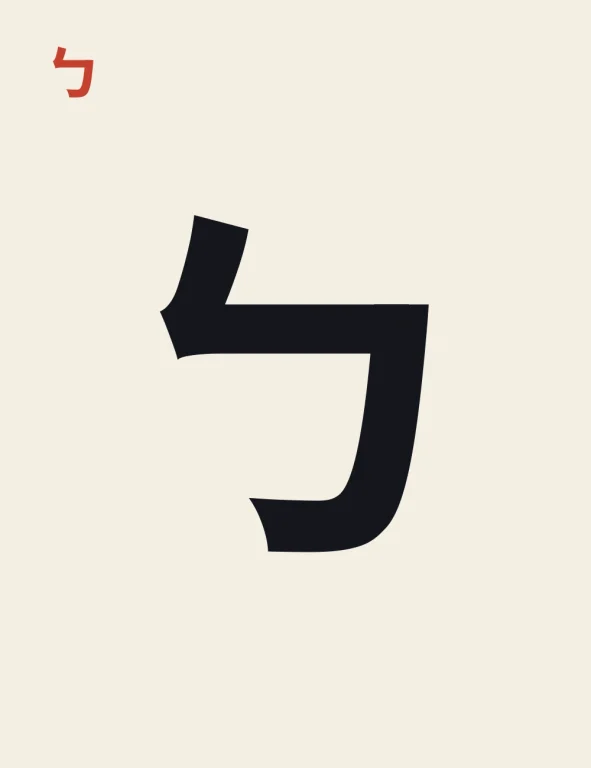
Follow the characters and the school your child will use. Mainland China, Singapore and many weekend Chinese schools abroad use pinyin with simplified characters; Taiwan uses zhuyin (bopomofo) with traditional characters. Both spell the same Mandarin sounds.
Will pinyin confuse my child's English reading?
Reading in a home language generally supports, rather than confuses, learning to read in a second one, according to research summarised by the American Federation of Teachers. Because pinyin shares letters with English, some children mix up a few sounds, like x and q, for a while. Name the difference out loud (in pinyin, x says xi) and keep pinyin time and English reading time apart.
Does my child need to learn the tones?
Yes, but by ear first. A young child who hears Mandarin copies tones naturally; the marks are just a way to write them down. Play with mā má mǎ mà like a song before worrying about which mark is which.
Why are y and w taught as initials?
In Chinese schools y and w are taught with the initials because they start syllables like yi and wu. They mainly stand in for i, u and ü at the start of a syllable: i becomes yi, u becomes wu, ü becomes yu.
 Memobara
Get your kids started with pinyin
- All 87 sounds, each said aloud in Mandarin
- Memory games with sound, to play together
- No ads, made for families
- Free to play in your browser
 Zhuyin (Bopomofo)
 Chinese strokes
 Chinese radicals
 Chinese numerals